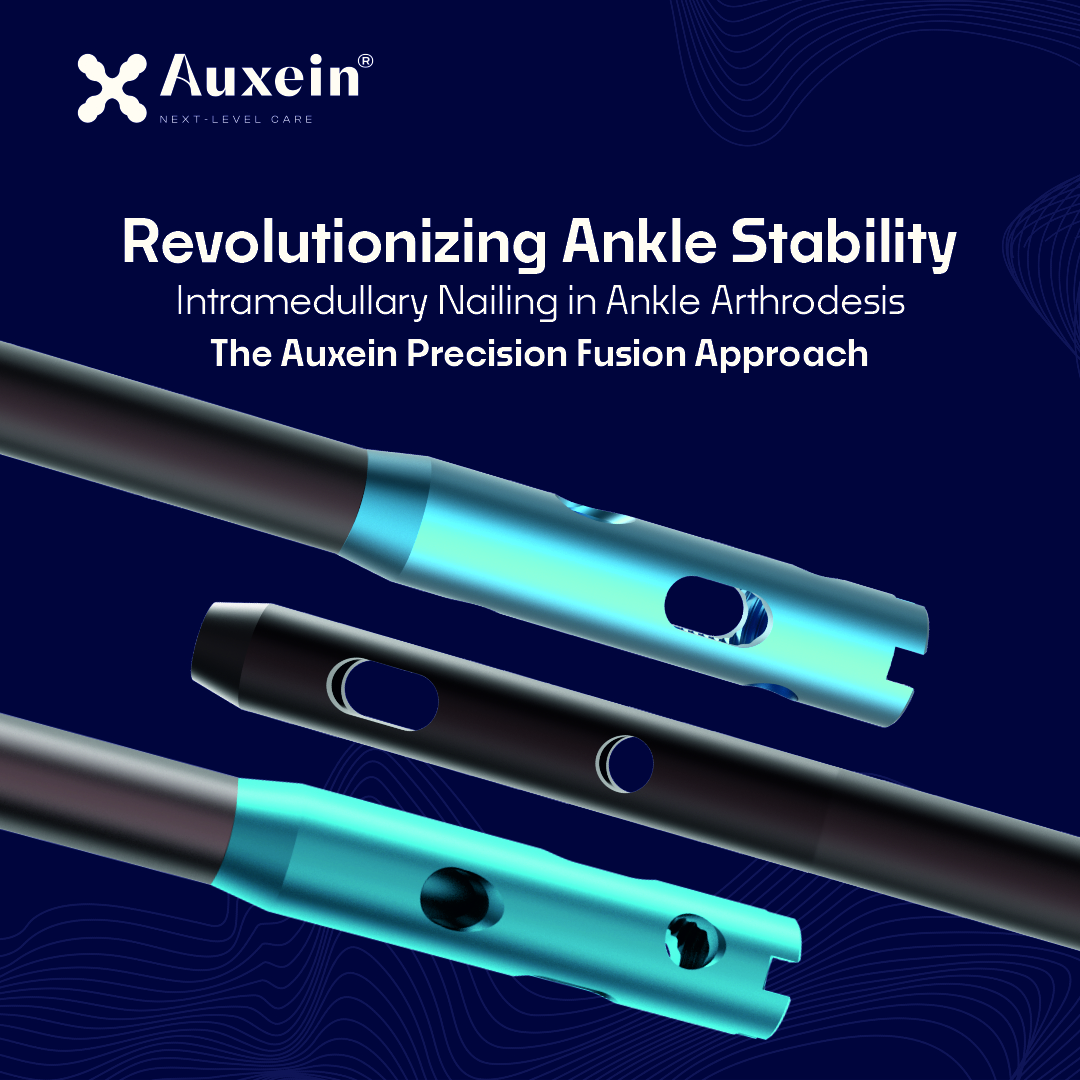
Ankle arthrodesis remains the gold standard for end-stage ankle arthritis and complex deformities. As fixation technology evolves, intramedullary nailing (IMN) has emerged as the superior approach for achieving optimal alignment, higher union rates, and earlier weight-bearing compared with traditional plating or external fixation methods. At Auxein, our fixation design philosophy aligns mechanical precision with biological integration—ensuring not just fusion but functional fusion.
Biomechanics of Intramedullary Ankle Arthrodesis
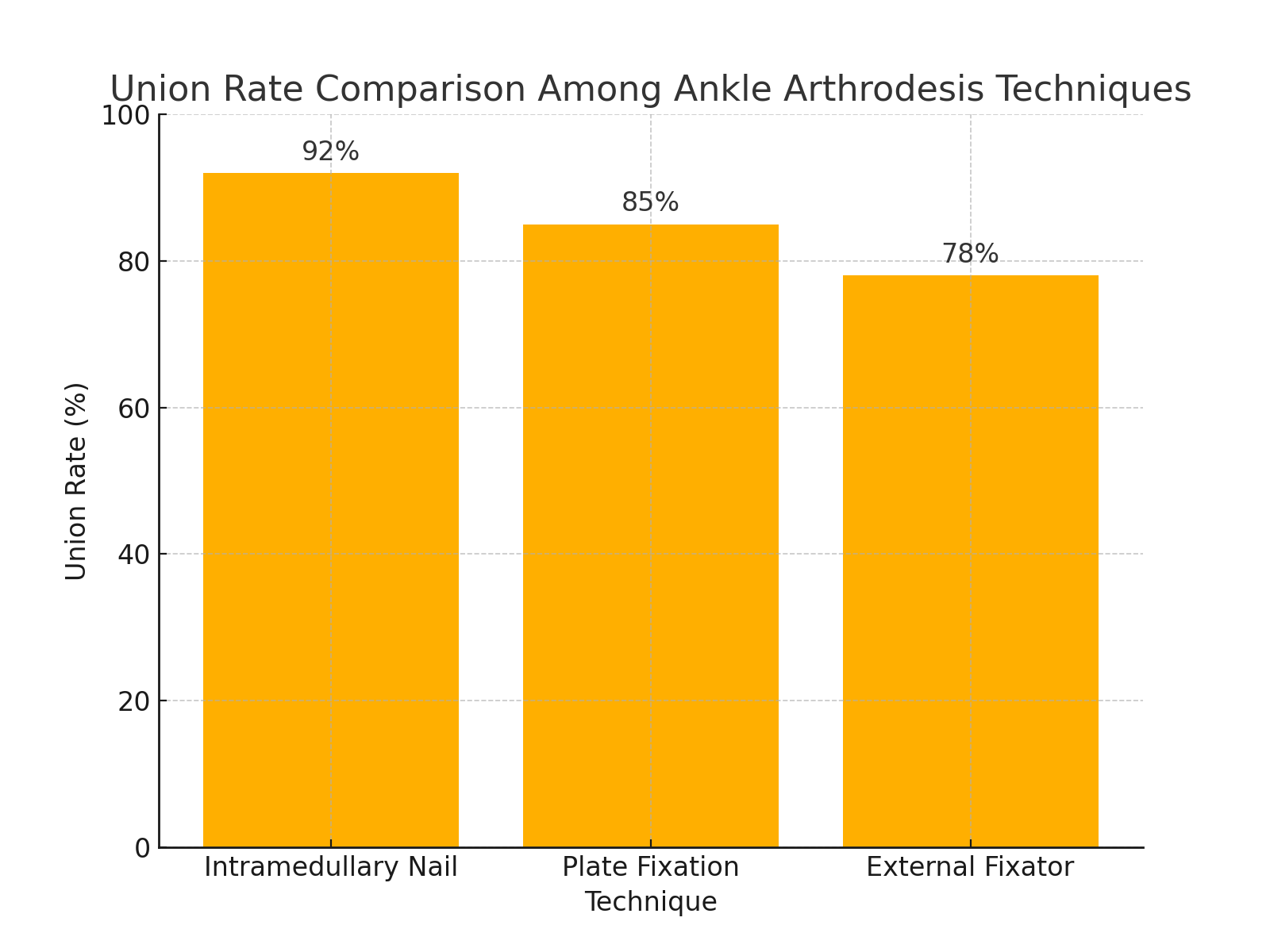
The tibiotalocalcaneal (TTC) nail acts as a central load-sharing device, transmitting compressive forces along the limb’s mechanical axis. Studies by Anastasio et al. (2025) demonstrate that active compression IM nails enhance union rates (92%) while reducing hardware failure and limb malalignment. Compared to traditional plates, IMN offers improved torque stability and reduced bending stress, critical for osteoporotic bone.
Key Biomechanical Insights:
30–40% improved axial load resistance (Wu et al., 2024)
Reduced micromotion at fusion site
Optimal mechanical alignment restoration
Figure 1 Union Rate Comparison Among Ankle Arthrodesis Techniques
Clinical Evidence and Comparative Outcomes
Study (Year)
Technique
Union Rate
Time to Union (weeks)
Complication Rate
Key Findings
Anastasio et al., 2025
IM Nail
92%
14
8%
Enhanced compression, minimal hardware failure
Barg et al., 2023
Plate Fixation
85%
16
12%
Higher nonunion risk in diabetics
Roukis et al., 2022
External Fixator
78%
20
20%
Effective for infection control but poor comfort
Adams et al., 2021
Retrograde IM Nail
91%
13
9%
Ideal for revision and deformity correction
Mendicino et al., 2020
Hybrid Plate + Nail
89%
15
11%
Balanced stability, but higher hardware stress
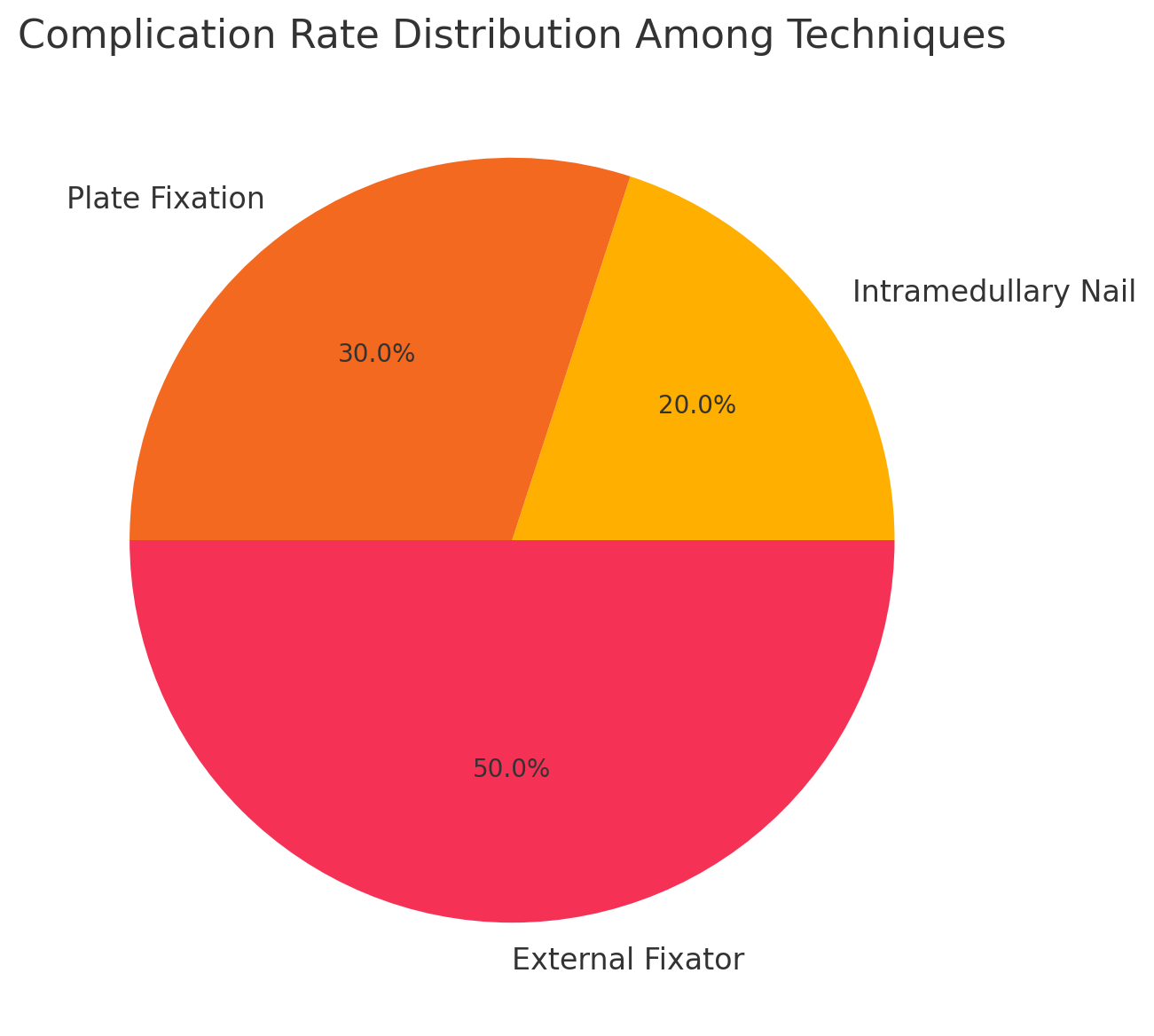
Figure 2 Complication Rate Distribution Among Techniques
Advantages of Intramedullary Nailing
Superior biomechanical stability under both torsional and compressive loads
Higher fusion rates even in osteoporotic or neuropathic bone
Early mobilization and full weight-bearing within 6 weeks
Reduced soft-tissue disruption compared to plate fixation
Ideal for complex deformities and revisions
Disadvantages and Considerations
Requires precision reaming and guidewire alignment
Risk of subtalar joint violation if positioning is off
May necessitate removal in infection scenarios
Auxein Vision: Engineering the Future of Fusion
The next generation of Auxein Ankle Arthrodesis Nails embodies our commitment to precision, compression, and consolidation. Through adaptive compression mechanisms, modular locking options, and biocompatible coatings, we aim to set new benchmarks in ankle reconstruction. With each implant, Auxein ensures that fusion is not just achieved—it’s perfected.
Key References
Anastasio AT, Wu KA, Luo EJ. (2025). Complications and Early-Term Radiographic Analysis of a Novel Active Compression Tibiotalocalcaneal Arthrodesis Nail. Foot & Ankle Orthopaedics. DOI:10.1177/24730114251323895
Barg A, et al. (2023). Outcomes of Plate Fixation in Ankle Arthrodesis. J Foot Ankle Surg.