
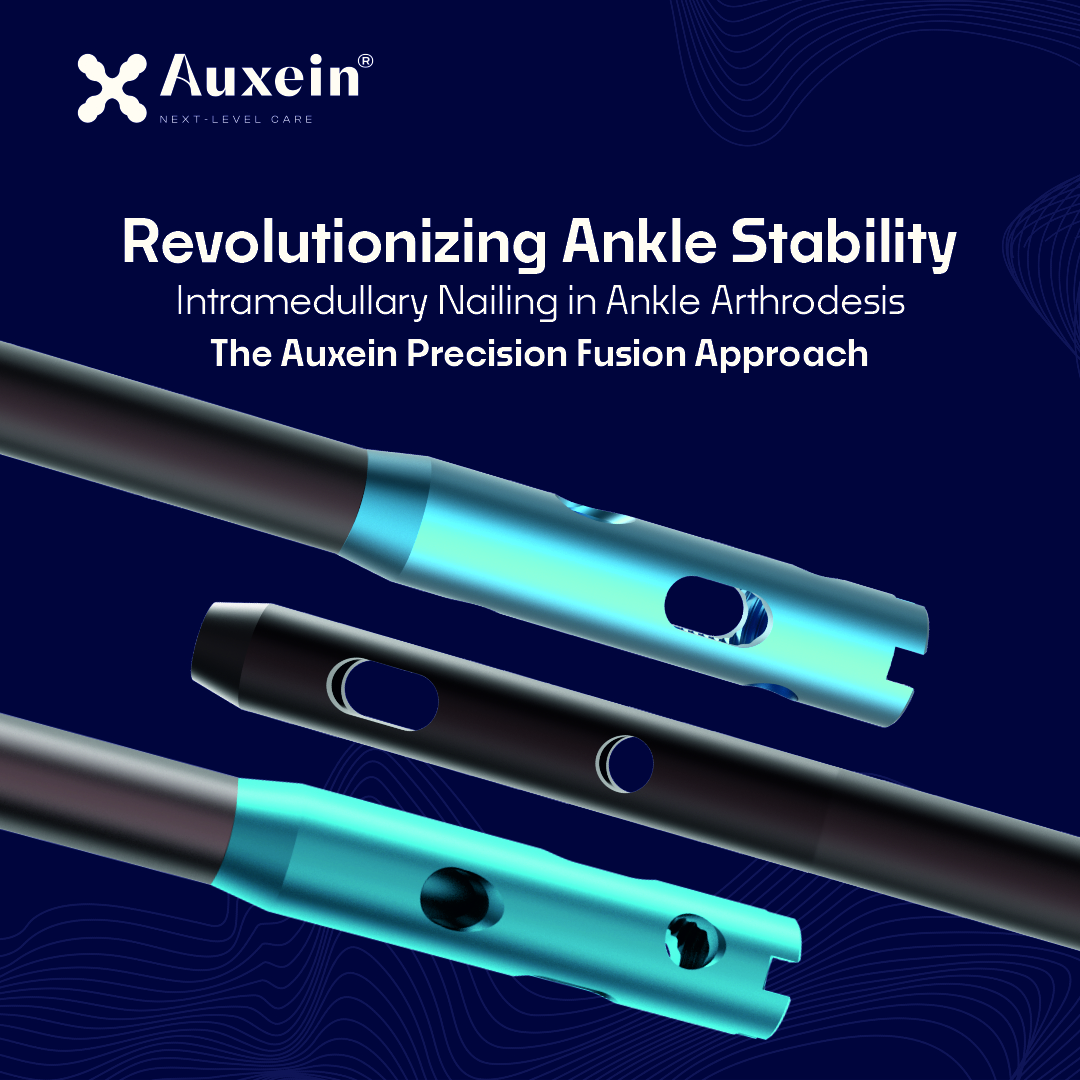
Ankle arthrodesis remains the gold standard for end-stage ankle arthritis and complex deformities. As fixation technology evolves, intramedullary nailing (IMN) has emerged as the superior approach for achieving optimal alignment, higher union rates, and earlier weight-bearing compared with traditional plating or external fixation methods. At Auxein, our fixation design philosophy aligns mechanical precision with biological integration—ensuring not just fusion but functional fusion.
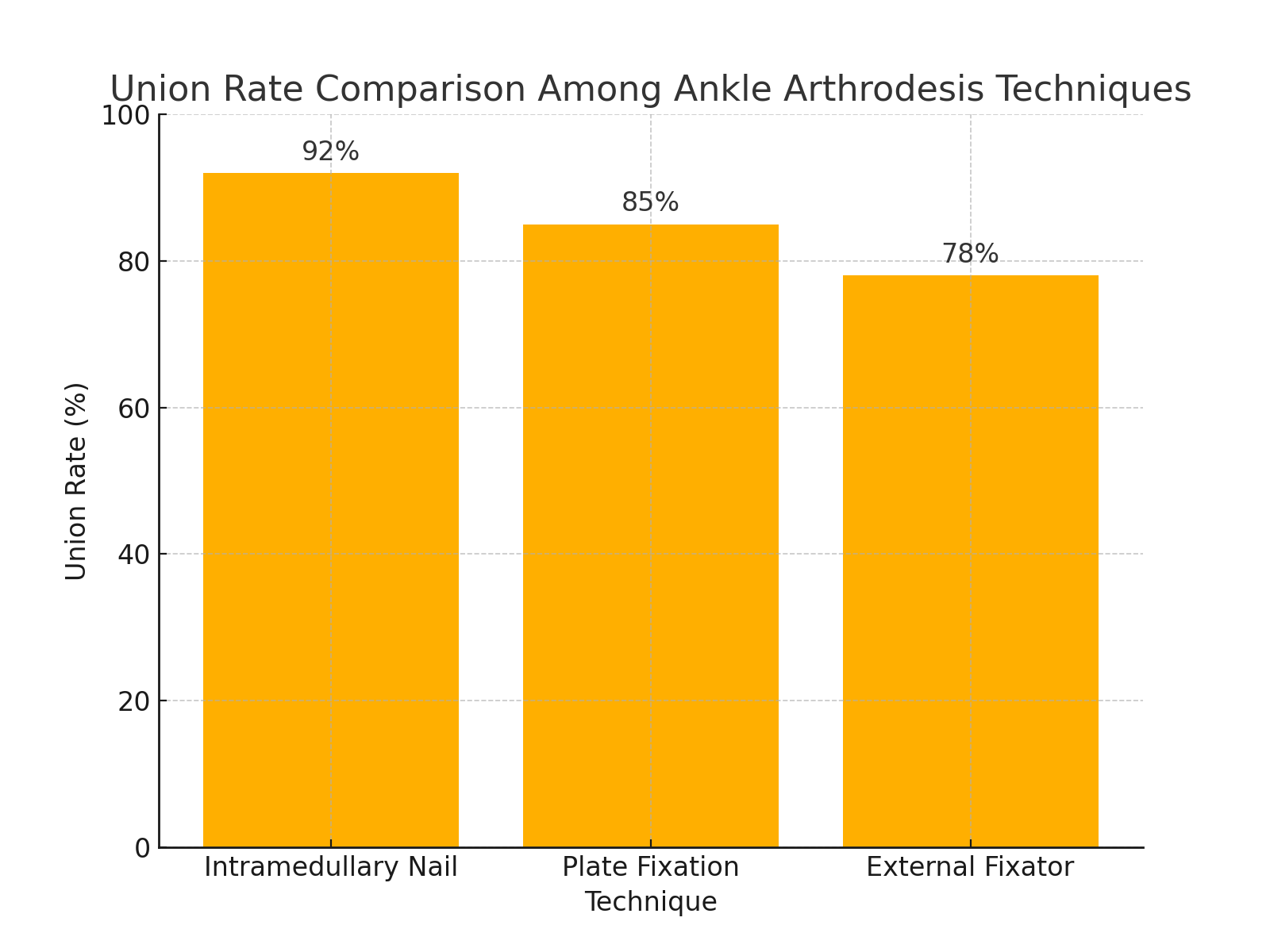
The tibiotalocalcaneal (TTC) nail acts as a central load-sharing device, transmitting compressive forces along the limb’s mechanical axis. Studies by Anastasio et al. (2025) demonstrate that active compression IM nails enhance union rates (92%) while reducing hardware failure and limb malalignment. Compared to traditional plates, IMN offers improved torque stability and reduced bending stress, critical for osteoporotic bone.
Key Biomechanical Insights:
Study (Year) | Technique | Union Rate | Time to Union (weeks) | Complication Rate | Key Findings |
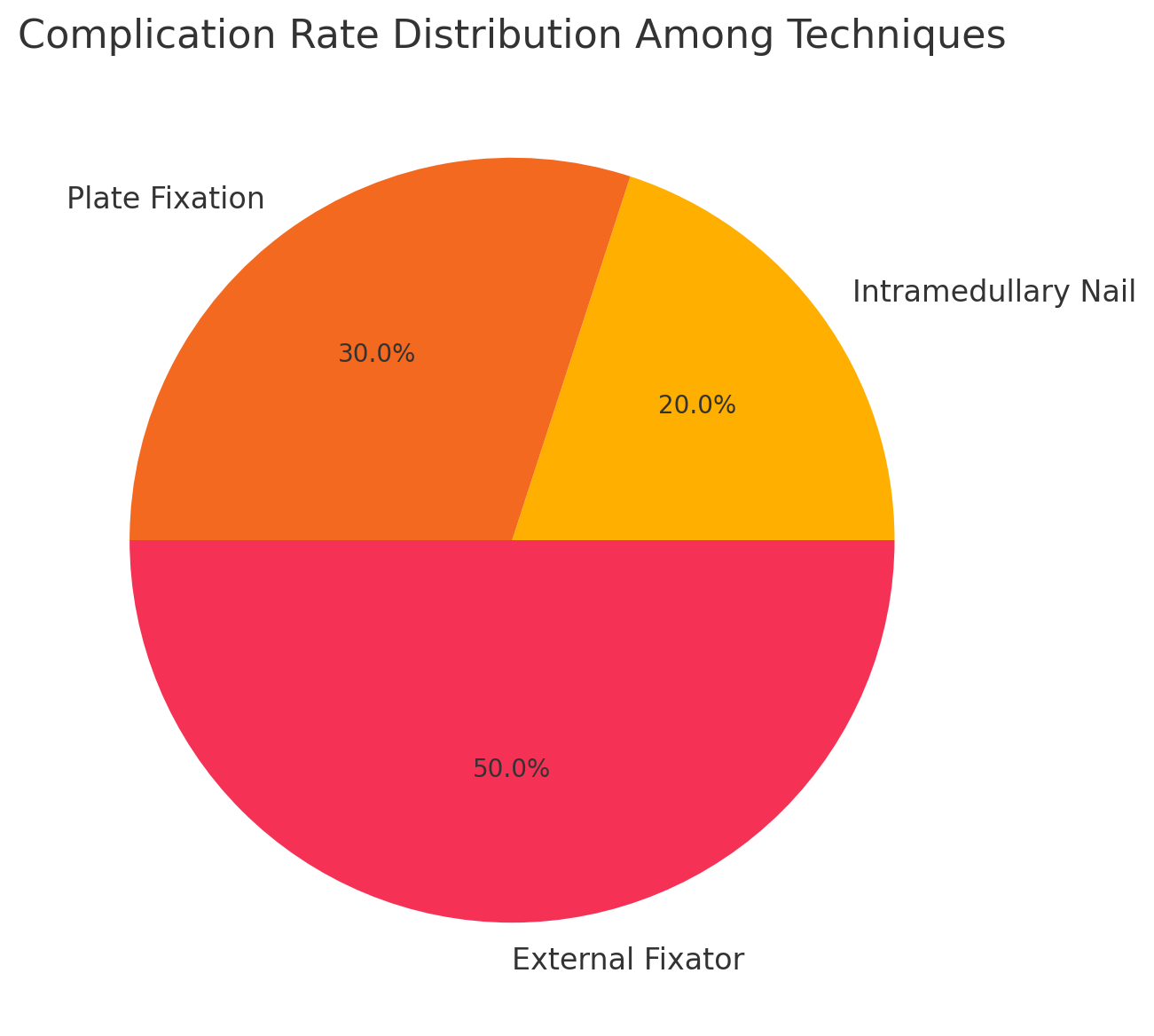
Anastasio et al., 2025 | IM Nail | 92% | 14 | 8% | Enhanced compression, minimal hardware failure |
Barg et al., 2023 | Plate Fixation | 85% | 16 | 12% | Higher nonunion risk in diabetics |
Roukis et al., 2022 | External Fixator | 78% | 20 | 20% | Effective for infection control but poor comfort |
Adams et al., 2021 | Retrograde IM Nail | 91% | 13 | 9% | Ideal for revision and deformity correction |
Mendicino et al., 2020 | Hybrid Plate + Nail | 89% | 15 | 11% | Balanced stability, but higher hardware stress |
The next generation of Auxein Ankle Arthrodesis Nails embodies our commitment to precision, compression, and consolidation. Through adaptive compression mechanisms, modular locking options, and biocompatible coatings, we aim to set new benchmarks in ankle reconstruction. With each implant, Auxein ensures that fusion is not just achieved—it’s perfected.
US FDA 510k Cleared, CE Marked, MDSAP, ISO 13485:2016, EU-MDR 2017 certified
Indian FDA Approved | GMP Certificate
USA
Auxein Inc.
1500 Nw 89th Court, Suite 107-108,
Doral, Florida 33172
Tel: +1 305 395 6062
E Fax: +1 305 395 6262
Email: USoffice@auxein.com
Mexico
Auxein México S.A. de C.V.
Tepic 139 int 801, Colonia
Roma Sur,
Alcaldía Cuauhtémoc, CDMX,
México, C.P. 06760
Tel: +521 55 7261 0318
Email: info@auxein.mx
Dubai UAE
Auxein Medical Trading FZCO
Oud Metha Offices Building,
B Block 1st Floor Office No.26,
Near Healthcare City,
PO BOX-25572
Tel: +971 438 71333
Email: info@auxein.com
India
Auxein Medical Pvt. Ltd.
Plot No. 168-169-170, Phase-4,
Kundli Industrial Area,
HSIIDC, Sector-57, Sonepat – 131028,
Haryana
Tel: +91 99106 43638 | Fax: +91 86077 70197
Email: info@auxein.com