Home/blog/Hamstring vs. BTB vs. Quadriceps vs. Peroneus Longus: Which ACL Graft Wins in 2026?
Hamstring vs. BTB vs. Quadriceps vs. Peroneus Longus: Which ACL Graft Wins in 2026?
Anterior Cruciate Ligament (ACL) reconstruction remains one of the most performed procedures in sports medicine. While graft selection has traditionally revolved around Hamstring Tendon (HT), Bone–Patellar Tendon–Bone (BTB), and Quadriceps Tendon (QT), emerging research in recent years has introduced the Peroneus Longus Tendon (PLT) as a strong, versatile alternative. As surgical outcomes continue to evolve, so does the evidence guiding graft choice — making 2026 an ideal moment to revisit the data.
The Traditional Titans: Hamstring, BTB, and Quadriceps
Each traditional graft type carries unique strengths and limitations:
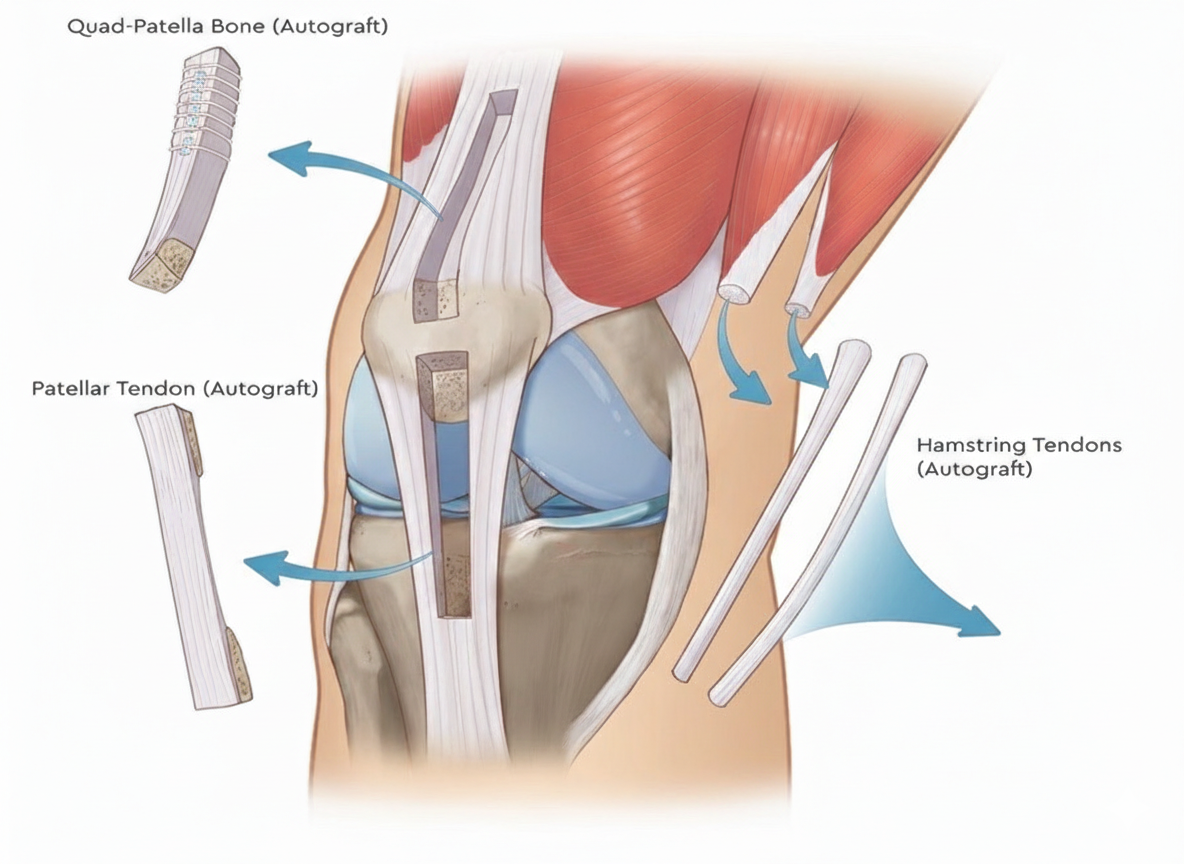
Hamstring Tendon (HT): Offers reduced anterior knee pain and minimal donor site morbidity but may cause mild postoperative hamstring weakness.
Bone–Patellar Tendon–Bone (BTB): Remains the gold standard for high-demand athletes due to strong bone-to-bone healing yet is associated with anterior knee discomfort.
Quadriceps Tendon (QT): Provides a thick, reliable graft with lower anterior knee pain than BTB, though it requires surgical precision during harvest.
The Rising Star: Peroneus Longus Tendon (PLT)
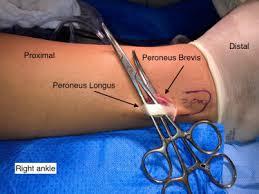
Recent literature has positioned the Peroneus Longus Tendon as a viable graft with strength and functionality comparable to BTB and HT grafts. Its key advantages include minimal donor-site morbidity, preserved ankle stability (due to peroneus brevis compensation), and excellent graft length and diameter.
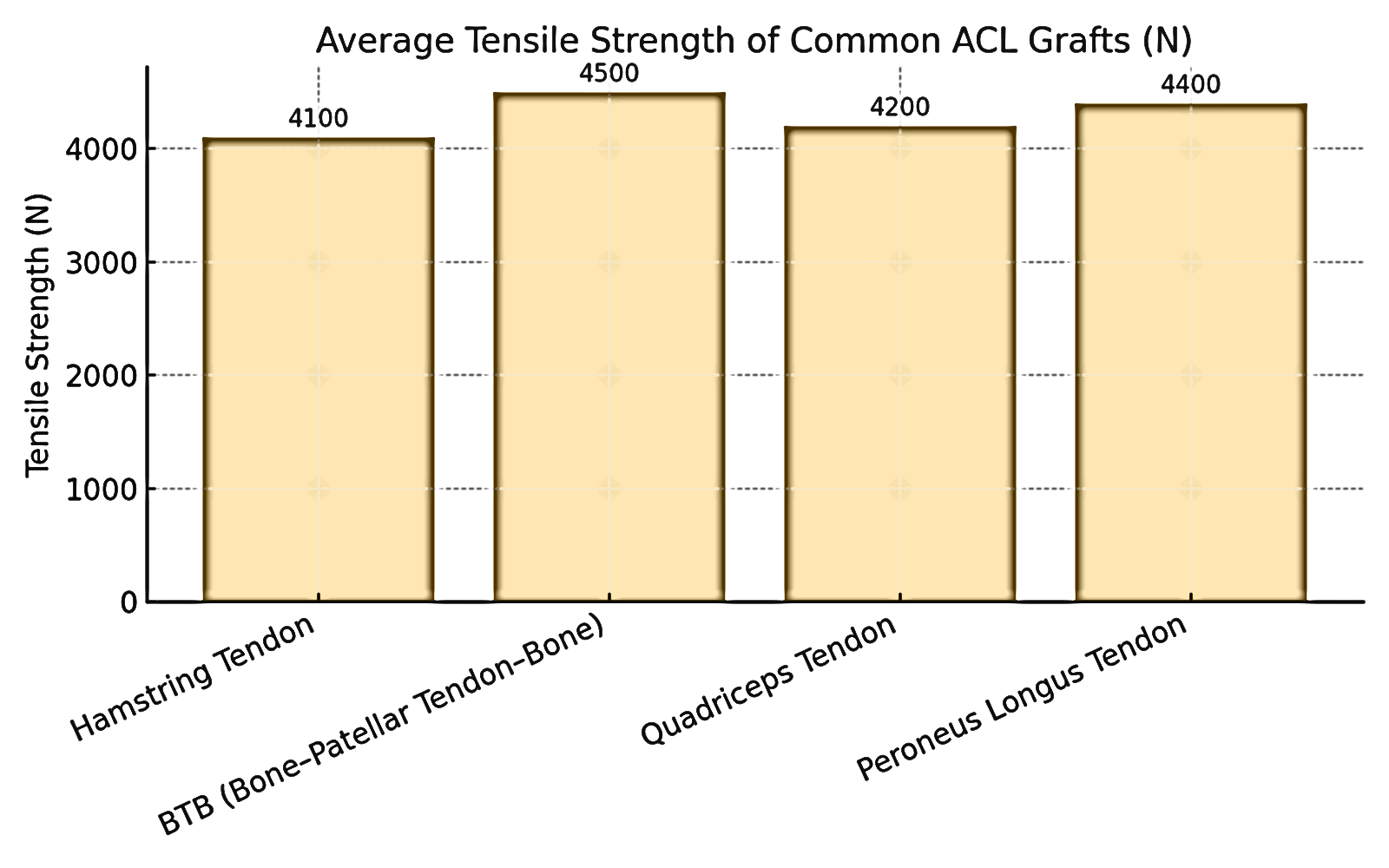
Figure 1. Average tensile strength comparison of common ACL grafts. (Data adapted from multiple biomechanical studies, 2023–2025)
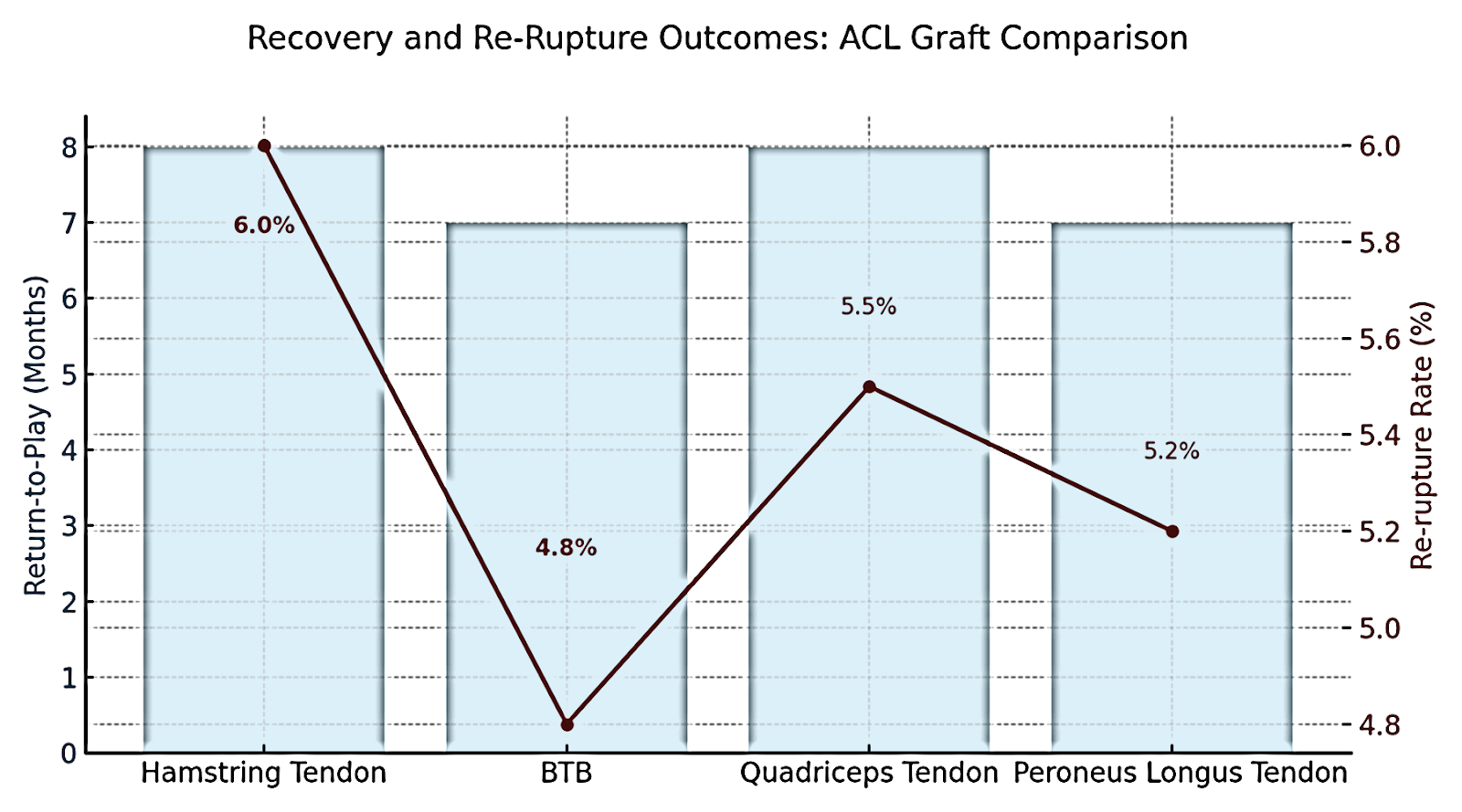
Figure 2. Comparison of Return-to-Play duration and Re-rupture rates across graft types.
Comparative Overview of ACL Graft Options
Parameter
Hamstring Tendon (HT)
BTB
Quadriceps Tendon (QT)
Peroneus Longus Tendon (PLT)
Tensile Strength (N)
4100
4500
4200
4400
Return-to-Play (Months)
8
7
8
7
Re-Rupture Rate (%)
6.0
4.8
5.5
5.2
Donor Site Morbidity
Low
Moderate
Low
Low
Ideal Candidate
General athlete
High-demand athlete
Revision or large graft
Versatile, low-morbidity case
Auxein’s Perspective: Where Biomechanics Meets Biology
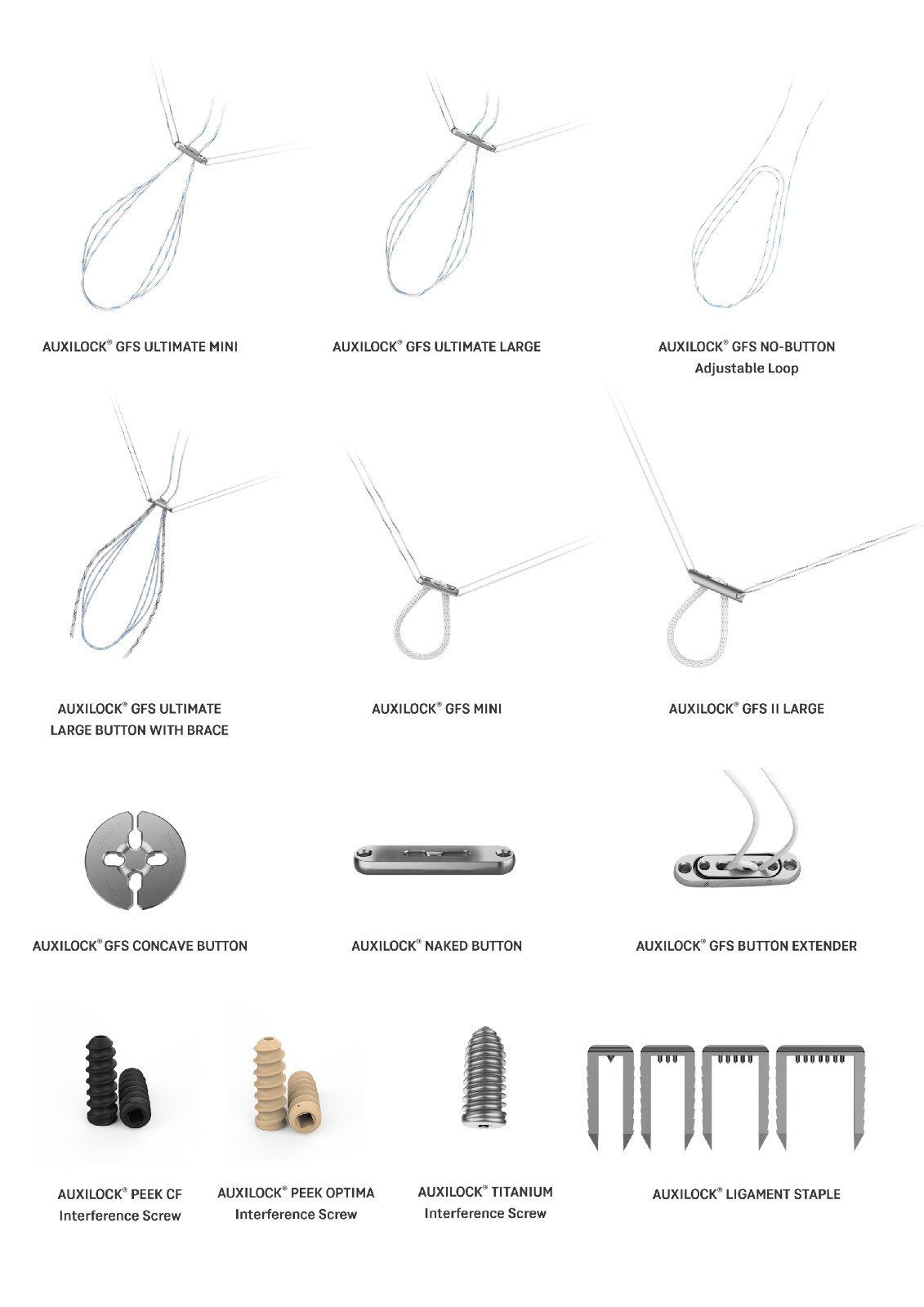
At Auxein, we believe that graft performance is not merely about tensile strength, but also about achieving seamless biological integration. The synergy between optimal graft choice and reliable fixation technology determines the long-term success of ACL reconstructions. Auxein’s AUXILOCK® ACL Fixation Range provides surgeons with a comprehensive range of adjustable-loop and fixed-loop options, concave buttons, naked buttons, interference screws, and supportive ligament staples — engineered for precise tensioning, secure fixation, and reliable performance.
In 2026, the landscape of ACL reconstruction continues to evolve toward personalized, evidence-based graft selection. The Peroneus Longus Tendon stands out as a promising graft option, combining strong biomechanical performance with low donor-site morbidity. With Auxein’s advanced fixation technology, surgeons are equipped to achieve the dual goal of mechanical stability and biological harmony — enabling athletes to return stronger, faster, and safer.
References
Liu X. et al. (2023). Peroneus longus tendon autograft for ACL reconstruction: biomechanical comparison with other autografts. Knee, 40(2), 145–152.
Mundada P. et al. (2024). Peroneus longus vs. hamstring tendon in ACL reconstruction: a randomized clinical comparison. Arthroscopy, 40(4), 1021–1028.
Park Y. et al. (2025). Functional ankle stability following peroneus longus harvest. Orthopaedics & Traumatology: Surgery & Research, 112(8), 2235–2243.
Feller J., Webster K. (2023). Patellar tendon graft outcomes in ACL reconstruction. American Journal of Sports Medicine, 51(12), 3014–3026.
Slone H. et al. (2024). Quadriceps tendon autograft in ACL reconstruction. Orthopaedic Journal of Sports Medicine, 12(3), 112–120.
Xie Y. et al. (2024). Hamstring tendon graft biomechanics and clinical outcomes. Knee Surgery, Sports Traumatology, Arthroscopy, 32(5), 821–832.