Home/blog/All-Inside ACL Reconstruction Vs. Traditional ACL Reconstruction Featuring Auxein’s Graft Fixation System
All-Inside ACL Reconstruction Vs. Traditional ACL Reconstruction Featuring Auxein’s Graft Fixation System
ACL Anatomy & Mechanism of Injury
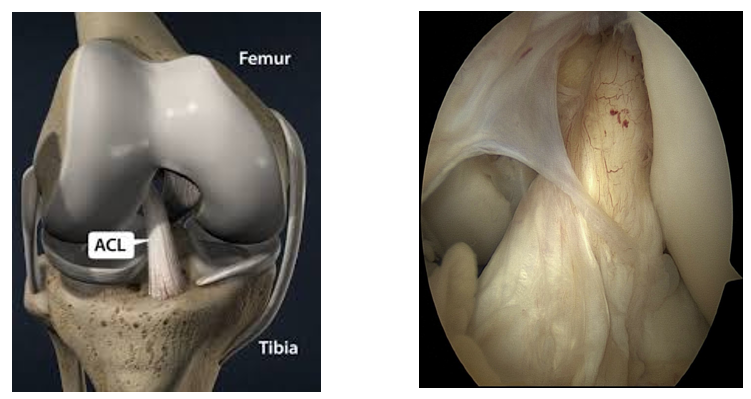
The anterior cruciate ligament (ACL) is one of the four key stabilizing ligaments of the knee. It runs from the lateral femoral condyle to the anterior tibial plateau. Functionally, it prevents anterior tibial translation, controls rotational loads, and contributes to proprioception.
ACL injuries are common in athletes, especially during pivoting, sudden deceleration, or improper landings. About 70% are non-contact injuries, often occurring in sports like basketball, football, and skiing.
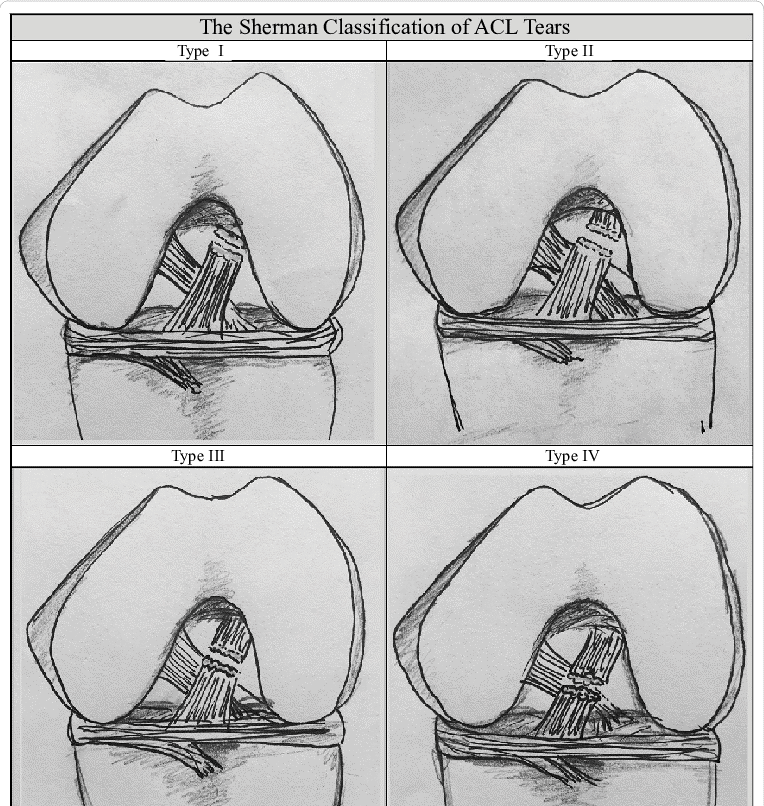
Sherman Classification of ACL Tears
Type I: Proximal avulsion tear with minimal distal remnant (ligament detached close to femoral insertion, <25% intact).
Type II: Proximal tear with 25–50% of ligament still attached to femur.
Type III: Tear at the midsubstance of the ACL (mid-ligament rupture).
Type IV: Distal avulsion tear near tibial insertion (ligament detached close to tibial attachment).
The Sherman Classification of ACL Tears
Surgical Technique Overview
The primary differences between the two procedures lie in their approach to bone and tissue preservation.
Traditional ACL Reconstruction: This method involves drilling full tunnels through both the femur and tibia to pass the graft. It typically requires harvesting both the semitendinosus and gracilis tendons, leading to greater donor site morbidity. The procedure also necessitates larger incisions.
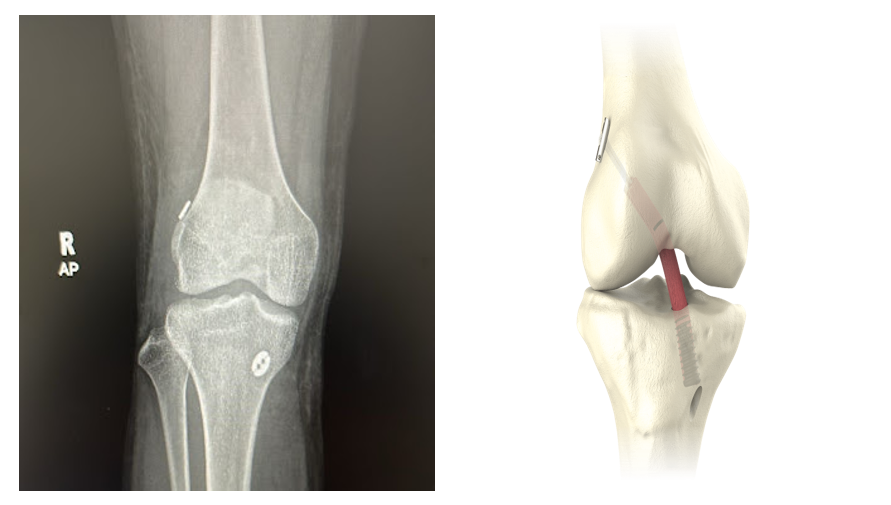
All-Inside ACL Reconstruction: This modern technique is significantly less invasive. Surgeons create short, bone-preserving sockets instead of full tunnels. It often requires only the semitendinosus tendon, reducing soft tissue damage and donor site morbidity. The use of Auxein’s GFS facilitates this through smaller, minimally invasive incisions.
Bone preservation → less tunnel expansion, easier revisions
Enhanced graft-bone healing
Surgical efficiency → shorter operative time
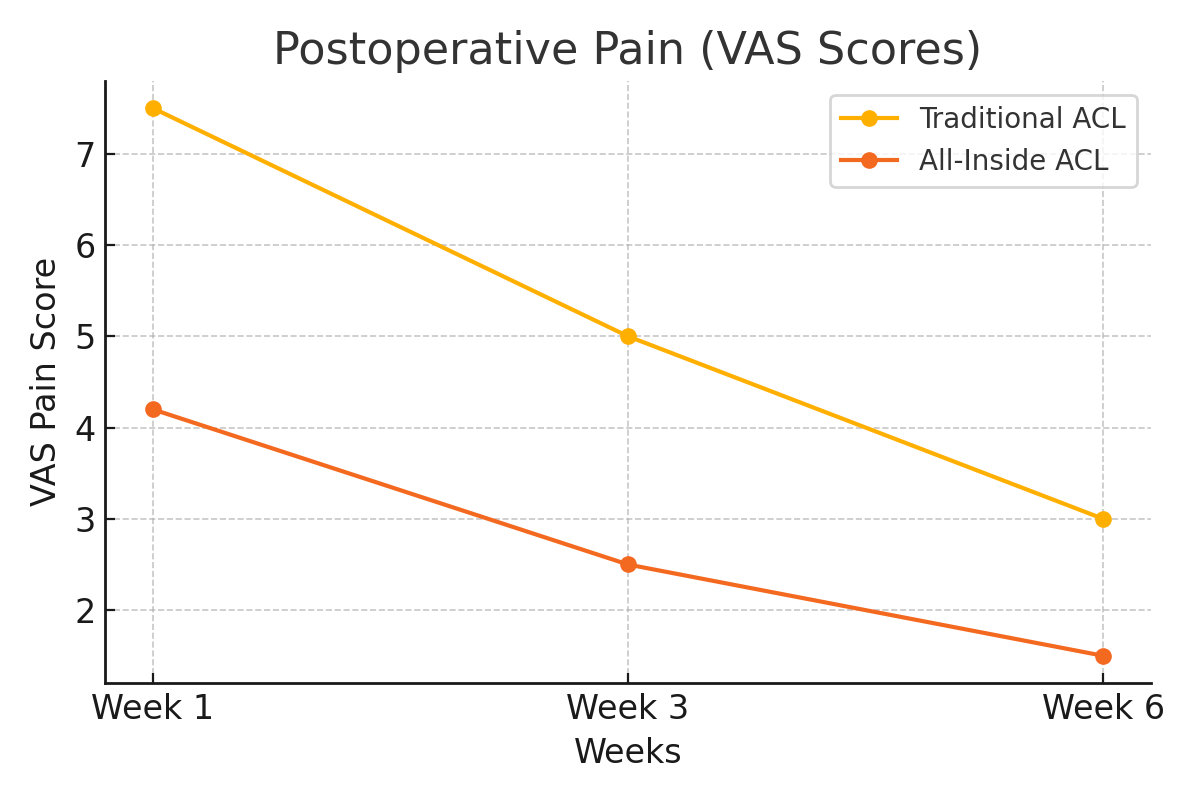
Patient benefits: less pain, faster recovery, higher satisfaction
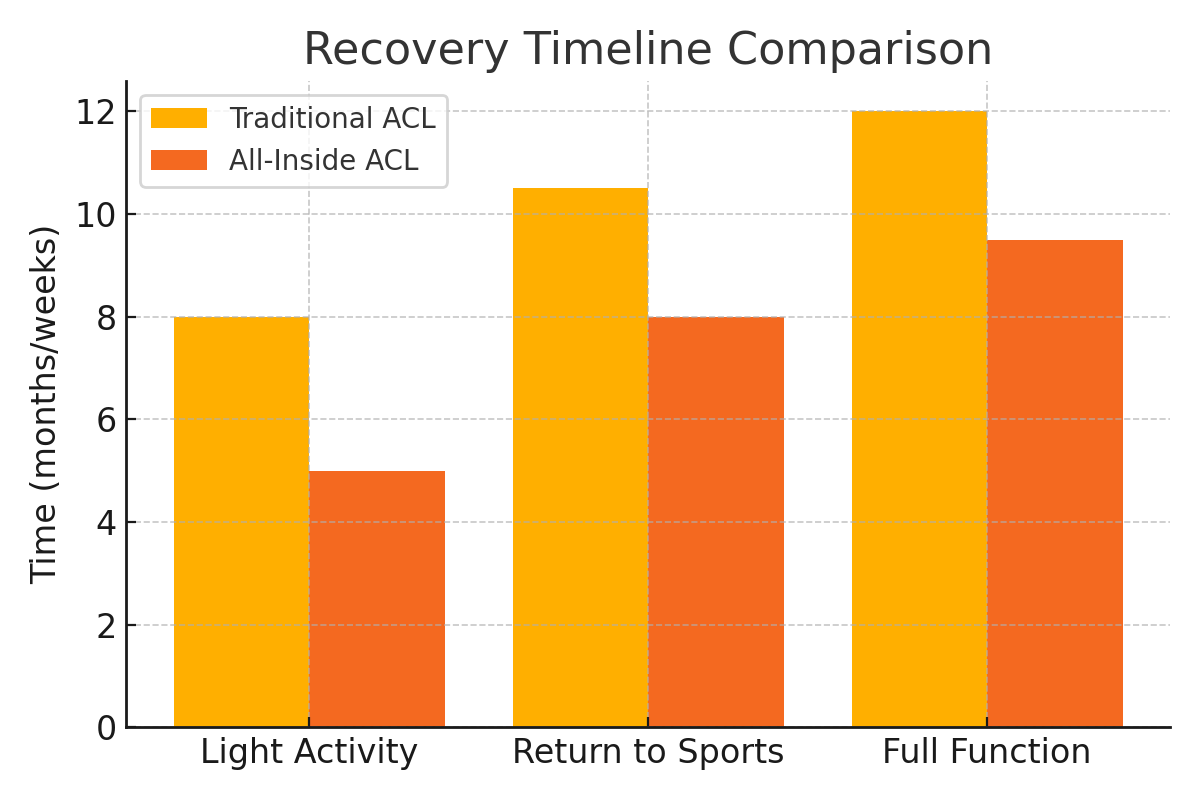
Recovery Timeline Comparison
Milestone
Traditional ACL
All-Inside ACL (GFS System)
Return to light activity
8 weeks
5 weeks
Return to sports
9–12 months
7–9 months
Full knee function
12 months
9–10 months
Why Choose All-Inside ACL with Auxein’s Graft Fixation System?
Minimally invasive with less pain and swelling
Preserves bone and soft tissue for better long-term joint health
Faster rehabilitation and earlier return to sports
Supported by robust biomechanical and clinical studies
References
Monaco, E., et al. (2019). All-inside vs complete tibial tunnel for ACL reconstruction: clinical outcomes at 5-year follow-up. Am J Sports Med, 47(3), 695–704. doi:10.1177/0363546518820304
Lubowitz, J. H., et al. (2019). All-inside ACL reconstruction and graft fixation: a review. Arthroscopy, 35(6), 1889–1898.
Alentorn-Geli, E., et al. (2018). Return to sport after ACL reconstruction: traditional vs all-inside. Knee Surg Sports Traumatol Arthrosc, 26(8), 2343–2351.
Cristiani, R., et al. (2020). Superior patient-reported outcomes after all-inside ACL reconstruction. Knee Surg Sports Traumatol Arthrosc, 28(2), 486–494.
Smith, P. A., et al. (2018). Biomechanical comparison of graft fixation in all-inside vs full tunnel ACL reconstruction. Orthop J Sports Med, 6(2), 232596711875530.
Zaffagnini, S., et al. (2019). Clinical stability and tunnel widening in all-inside ACL. J Bone Joint Surg Am, 101(20), 1855–1864.
De Sa, D., et al. (2018). Systematic review of all-inside ACL reconstruction. Arthroscopy, 34(4), 1316–1333.
Xu, M., et al. (2021). Meta-analysis: all-inside vs conventional ACL reconstruction. J Orthop Surg Res, 16(1), 102.
Moatshe, G., et al. (2020). Long-term graft survival: all-inside vs traditional techniques. Am J Sports Med, 48(9), 2242–2251.
Song, G. Y., et al. (2017). Tunnel widening and graft healing after all-inside ACL reconstruction. Knee Surg Sports Traumatol Arthrosc, 25(8), 2429–2437.