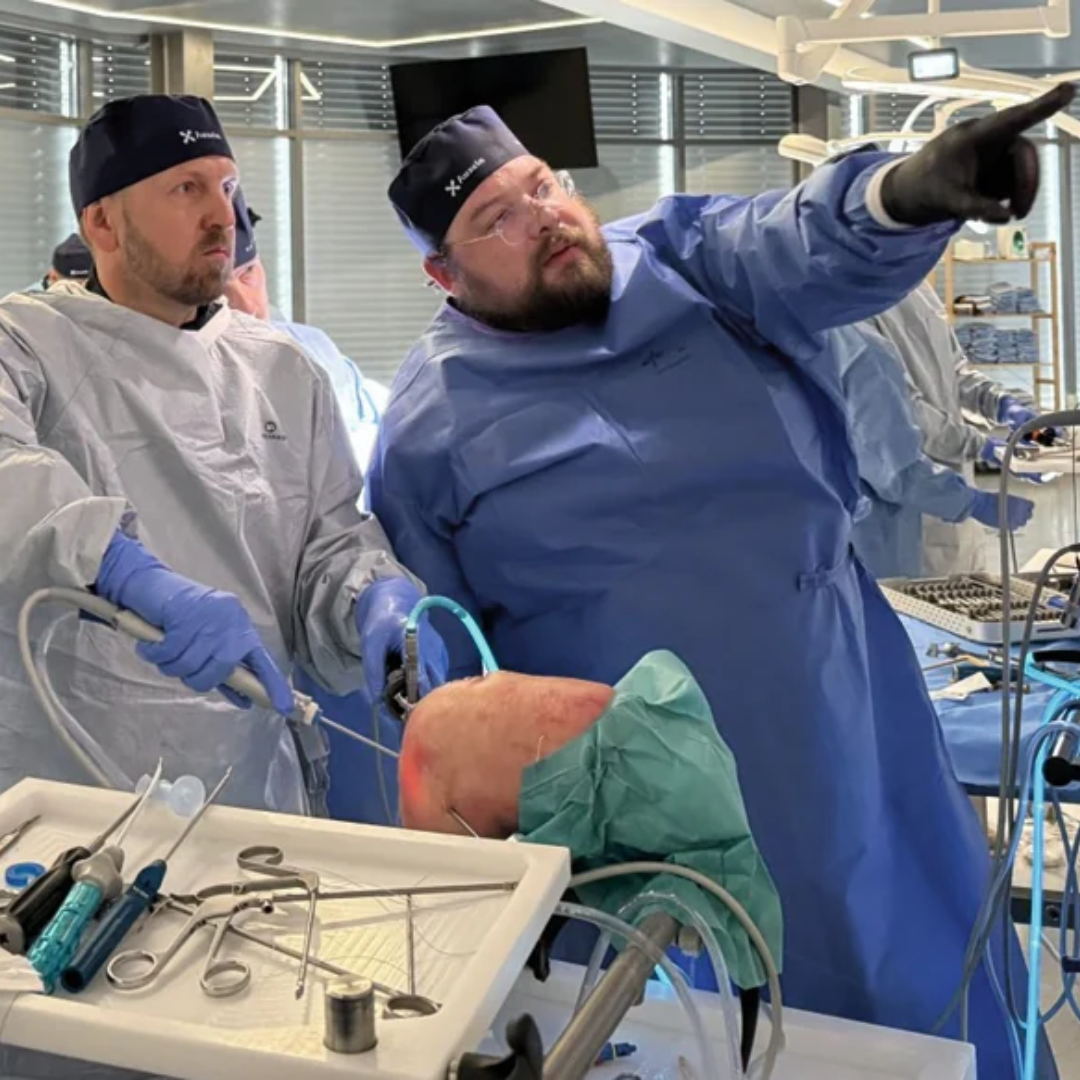
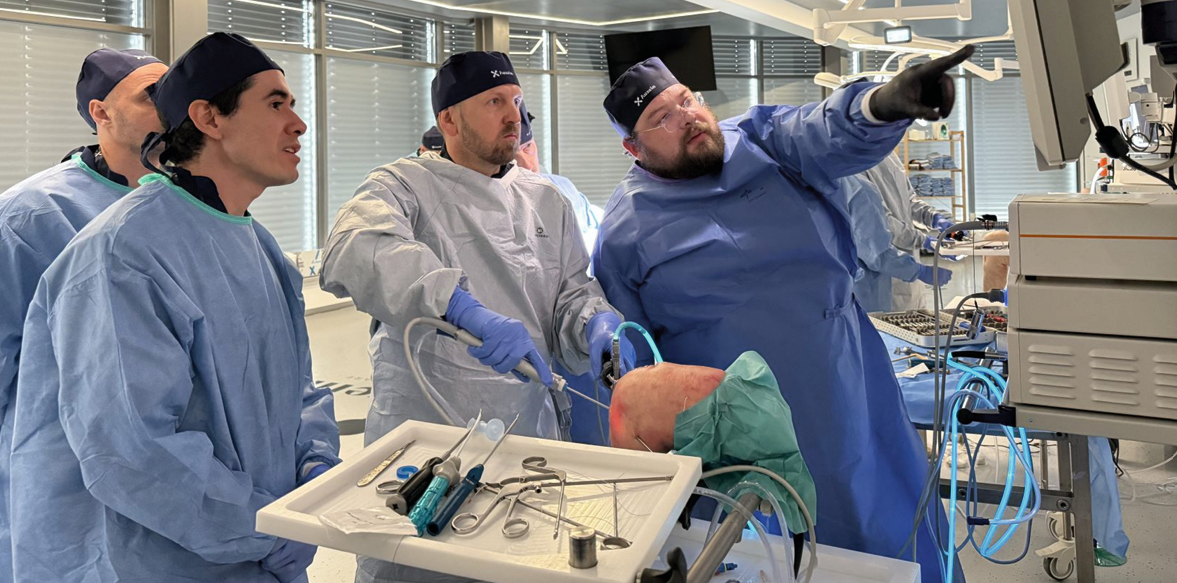
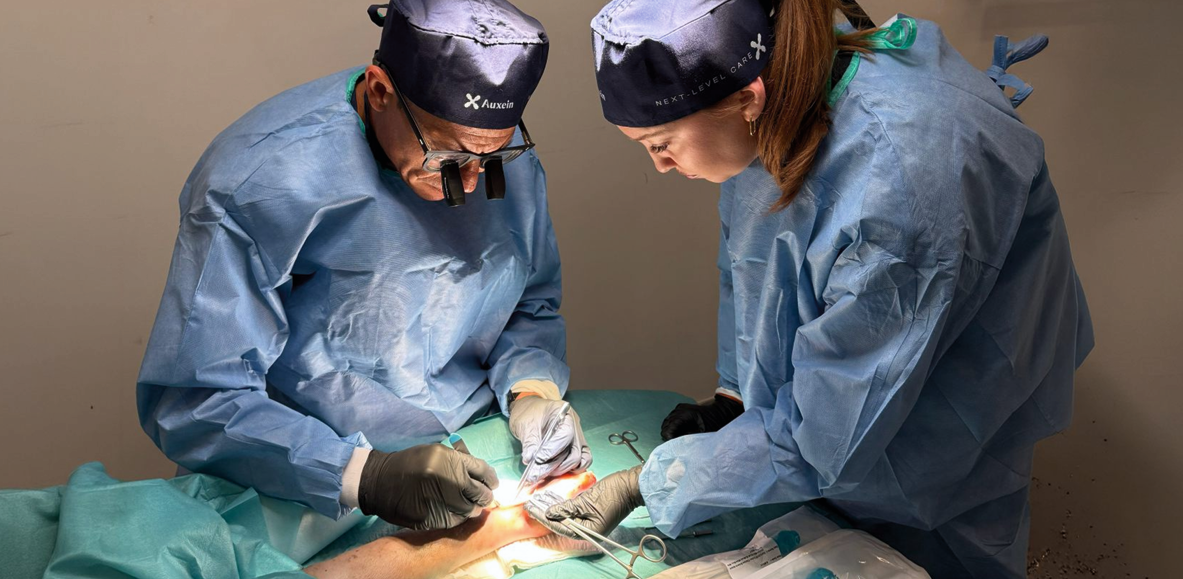
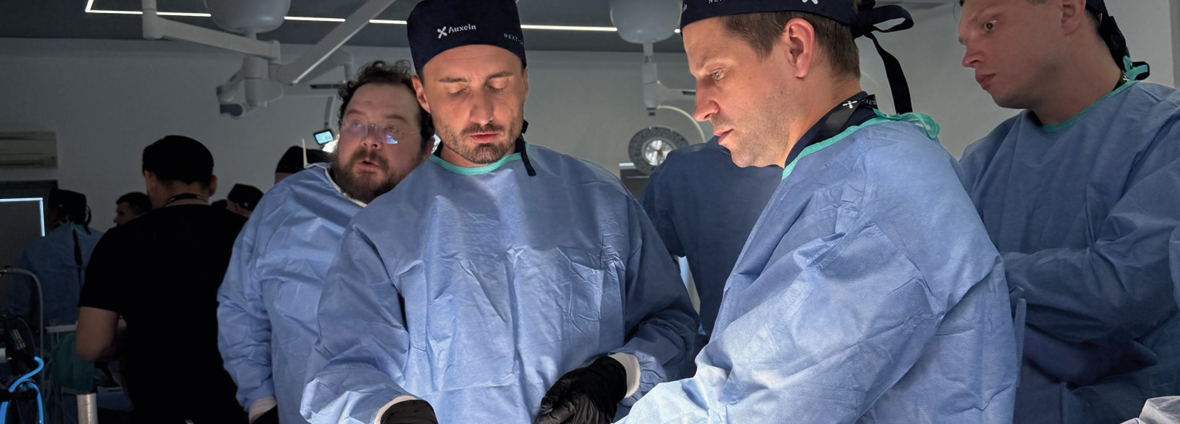
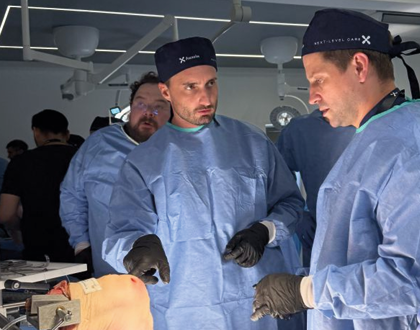
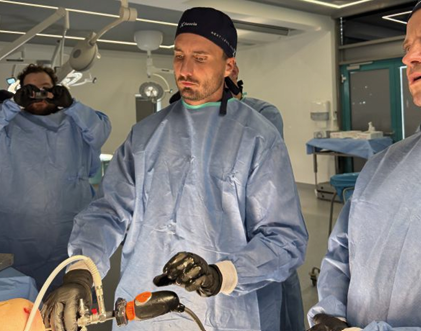
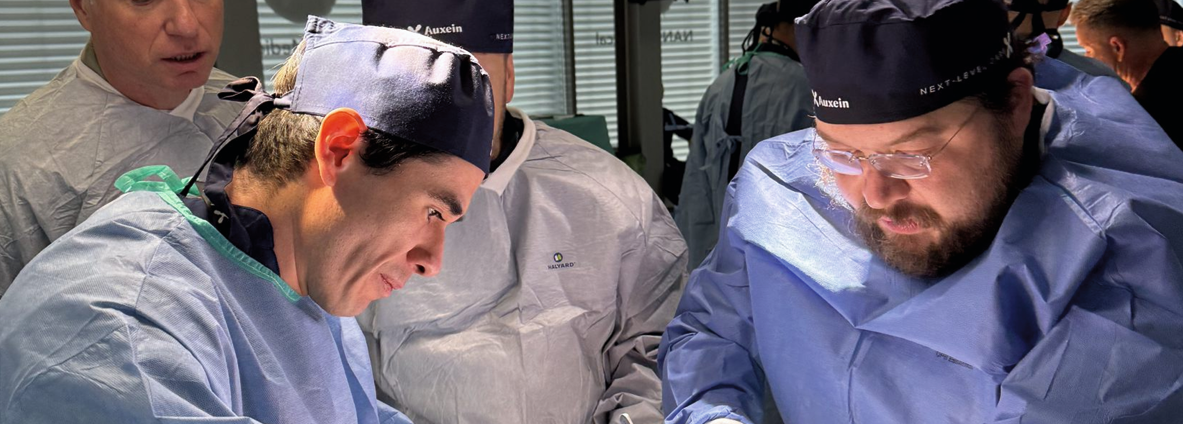
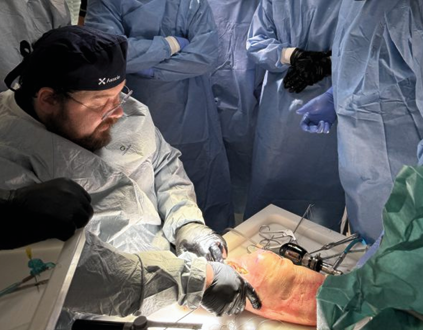
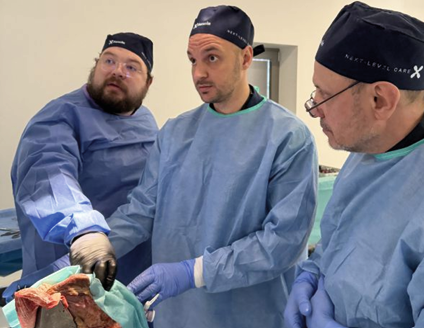
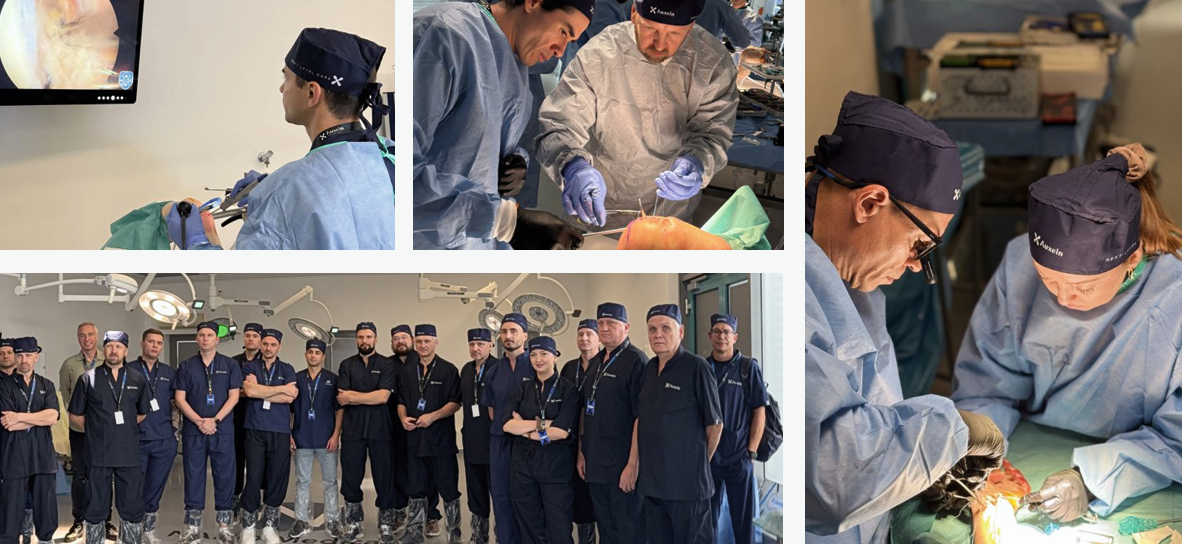
On 24 & 25 September 2026, Auxein brought together 18 orthopedic surgeons from four countries at the Auxein × Nano Medical Training Centre in Groß-Gerau, Germany, for advanced cadaveric training in knee and shoulder arthroscopy and High Tibial Osteotomy (HTO). The programme provided a platform for surgeons to exchange clinical perspectives, discuss contemporary surgical techniques, and learn through expert-led demonstrations and hands-on practice.
The Programme at a Glance
2 Days of Training
18 Surgeon Participants
4 Participating Countries
3 Core Training Areas
Participating Countries
Ukraine 9 Participants
Poland 7 Participants
Spain 1 Participant
Mexico 1 Participants
From Observation to Hands-On Experience
At Auxein, learning goes beyond theory. The cadaveric training programme provided surgeons with opportunities to explore anatomical structures, practise surgical techniques, and refine their understanding in a realistic, controlled learning environment under expert guidance.
Why Cadaveric Training Matters:
Real Anatomical Understanding: Explore anatomical structures, variations and clinical relevance.
Practical Skill Development: Gain hands-on experience with surgical approaches and instrument handling.
Expert Guidance: Learn through demonstrations, discussions, and feedback from experienced faculty.
Structured Practice: Repeat technical steps and refine techniques in a supervised educational setting.
Advancing Surgical Techniques
Acl & All Graft Preparation
Expert Demonstration | Dr. Samo Novak, MD (Specialist Orthopaedic Surgeon)
A key highlight of Auxein was the demonstration of ACL and ALL graft preparation by Dr. Samo Novak. The session provided participants with an opportunity to observe the technical steps involved, discuss the surgical principles behind the approach, and explore the technique through hands-on cadaveric practice.
Key Learning Focus:
Graft Preparation: Understanding the technical steps involved in ACL and ALL graft preparation.
Surgical Principles: Exploring the concepts underlying the demonstrated approach.
Expert Demonstration: Observing the technique and engaging in focused discussion.
Hands-On Practice: Translating demonstrated concepts into practical cadaveric learning.
Precision in Every Step
High Tibial Osteotomy (HTO)
Expert Demonstration | Prof. George Benjamin Edgar (M.D, M.P.H.)
Prof. George Benjamin Edgar demonstrated High Tibial Osteotomy (HTO), highlighting the surgical principles and technical considerations involved in achieving appropriate correction. The session explored preoperative planning, accurate osteotomy execution, controlled correction, and the importance of lower-limb alignment through hands-on cadaveric practice.
Key Technical Considerations:
Preoperative Planning: Understanding the intended correction and alignment goals.
Osteotomy Execution:Appreciating the technical steps involved in the procedure.
Controlled Correction: Understanding the importance of accuracy during correction.
Lower-Limb Alignment: Recognising the role of alignment in surgical planning.
Shaping the Future of Surgical Education
Auxein Medical’s commitment to advancing orthopedic education through scientific learning, international collaboration, surgical innovation, and practical training. By bringing together surgeons, researchers, educators, and industry partners, the programme aims to create opportunities for knowledge exchange, skills development, and continued professional learning.
What Lies Ahead
Emerging Surgical Technologies: Exploring new tools and techniques in orthopedic surgery.
Innovative Arthroscopic Techniques: Expanding knowledge through evolving surgical approaches.
International Faculty Collaboration: Connecting experts to encourage shared learning.
Research & Educational Innovation: Strengthening research-oriented learning and skills assessment.